On the Golden Positivity Ratio

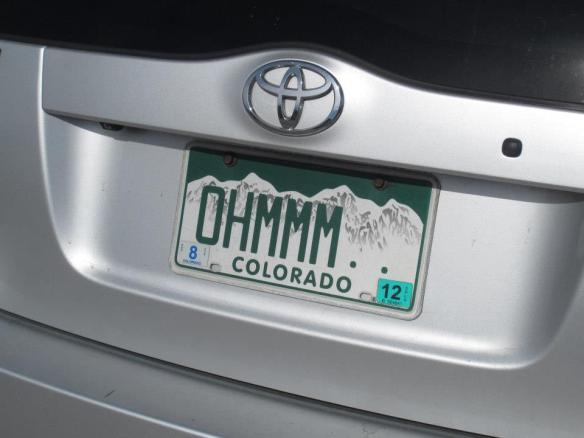
img_3845

Courtesy of Bryan Jorgensen, Las Vegas, NV, 2016

NaBloPoMo 2016, Letters to Patients, Day 25

To Patients Seeking Positivity:

Aim for the Golden Ratio!

As many of you know, I have recently undertaken to re-evaluate my Facebook usage.  Not long after I established my account c.2008, I decided to make my page a monument to positivity.  I realized that after I die, it would be the most visible and accessible legacy I leave, and I have total control over what I post.  I minimized complaining and ranting, and when frustrated I would try to write with an attitude of learning, of moving forward.  Lately I tend to leave off the latter.

Somewhere along the way, I think over the past year, but I’m not sure, pessimism and cynicism snuck in, no doubt related to politics.  The layers of consciousness infiltrated by the negative campaigning this time around extend deeper than any other election cycle in my memory—but maybe I just don’t remember.  I think humans have evolved to forget pain as a survival mechanism.  If women remembered all the pain and anxiety of pregnancy, delivery, and caring for a newborn, we would never do it more than once, are you kidding me?

I used to review my Facebook posts and feel elevated.  Today they often bring me down; it feels terrible.

Thankfully, I have some tools to resist the negativity.  I was reminded recently during my 3 Question Journal Shares with Donna over at A Year of Living Kindly.  I remembered something about healthy relationships maintaining a 3:1 ratio of positive to negative interactions.  Turns out it’s actually 5:1, widely attributed to observations by Dr. John Gottman, renowned marriage and relationship psychologist.  I think the same thing applies in other realms, too, such as self-talk—a reflection of our relationship with ourselves.  It’s not a far leap to see how this idea pertains to news, social media, and any other human interactions.

Business researchers have discovered a 5.6:1 ideal ratio in highly functioning organizations, whereas low-performing teams’ ratio landed close to 0.3:1.

For more information on the science behind the theory (and motivation for practice), I highly recommend Positive Psychology in a Nutshell, by Ilona Boniwell.  For a brief overview, check out this PDF.  The book summarizes the origins of positive psychology as a field, and the research and wisdom of its study and application.  For example, psychologist Barbara Frederickson has described how positive emotions contribute to our personal growth and development (taken from Boniwell’s text):

  1. Positive emotions broaden our thought-action repertoires
  2. Positive emotions undo negative emotions
  3. Positive emotions enhance resilience

So hereafter, I will pay more attention.  I will likely continue to share articles that illuminate my concerns for the future.  But I will aim for the 5:1 positivity ratio.  Holy cow, can you imagine if that’s actually what we saw on the news and social media?  And why not aspire to 5:1 in my personal interactions, too?  That’s taking charge of my own happiness, yes.
On Experiencing and Expressing Gratitude

dsc_0638

NaBloPoMo 2016, Letters to Patients, Day 23

To Patients Seeking Words for Gratitude:

I found them!

As we head to gatherings tomorrow and seek words to honor and express the occasion, I’m particularly grateful today to see the post below by David Whyte.  Where, you ask?  Why on Facebook, of course!  Back tomorrow with my own original words.  Until then, peace and gratitude to you all!

***  ***  ***

GRATITUDE

is not a passive response to something we have been given, gratitude arises from paying attention, from being awake in the presence of everything that lives within and without us. Gratitude is not necessarily something that is shown after the event, it is the deep, a-priori state of attention that shows we understand and are equal to the gifted nature of life.

Gratitude is the understanding that many millions of things come together and live together and mesh together and breathe together in order for us to take even one more breath of air, that the underlying gift of life and incarnation as a living, participating human being is a privilege; that we are miraculously, part of something, rather than nothing. Even if that something is temporarily pain or despair, we inhabit a living world, with real faces, real voices, laughter, the color blue, the green of the fields, the freshness of a cold wind, or the tawny hue of a winter landscape.

To see the full miraculous essentiality of the color blue is to be grateful with no necessity for a word of thanks. To see fully, the beauty of a daughter’s face across the table, of a son’s outline against the mountains, is to be fully grateful without having to seek a God to thank him. To sit among friends and strangers, hearing many voices, strange opinions; to intuit even stranger inner lives beneath calm surface lives, to inhabit many worlds at once in this world, to be a someone amongst all other someones, and therefore to make a conversation without saying a word, is to deepen our sense of presence and therefore our natural sense of thankfulness that everything happens both with us and without us, that we are participants and witness all at once.

Thankfulness finds its full measure in generosity of presence, both through participation and witness. We sit at the table as part of every other person’s strange world while making our own world without will or effort, this is what is extraordinary and gifted, this is the essence of gratefulness, seeing to the heart of privilege.

Thanksgiving happens when our sense of presence meets and fully beholds all other presences. Being unappreciative, feeling distant, might mean we are simply not paying attention.

© 2015 David Whyte
from ‘GRATITUDE’
In CONSOLATIONS: The Solace, Nourishment and Underlying Meaning of Everyday Words.
© David Whyte and Many Rivers Press 2015

On What Helps

598672_4331811328037_1344124821_n

NaBloPoMo 2016, Letters to Patients, Day 22

To Patients Preparing for Uncomfortable Holidays:

Seek what helps.

What did I write recently about staying off of Facebook and minimizing my social media exchanges?  How fascinating, look what I just did—spent the last two hours on Facebook!  I also write about trying, falling down, and trying again…  So this is me both falling down (in my attempt to stay off) and trying again (to engage meaningfully).

The holidays are coming, yay!  …And, not so yay!  The conversations we have with friends and family in the next 6 weeks or so have enormous potential—for division as well as connection.  Personally, I feel optimistic.  I plan to evoke my core values of open-mindedness, empathy, and integrity.  I want to look back on the gatherings with gratitude and deeper connection.  So today I share with you all the things I have read (today—see?  I endure Facebook for your benefit! teeheehee) that have helped me.  These pieces validate, challenge, reassure, alarm, question and motivate me to Hold the Space, Stay on the Path, and Seek Love.  Please share yours, also!

A fellow physician’s acknowledgement of the humanness of bias, its potential for harm in caring for patients, and a reminder for self-awareness and –management.

Posts by Michelle at The Green Study, reminding us that internal conflict is normal in the face of world events such as ours, with concrete suggestions for actions that align with core values:  “We cannot strengthen our character unless it is tested. We cannot defend our freedoms unless they are threatened. We cannot become better writers or artists or humans unless we have obstacles to overcome.”

An article from The Guardian that points me to reputable sources of alternate points of view, so I may understand better.

A call out from the Wall Street Journal—to help me own my shit before I call out others on theirs.

A gentle message from fellow blogger John Pavlovitz: “Friend, however you choose to navigate these holidays, know that it’s the right way. Give yourself permission to pretend or confront or abstain as you need to, and forgive yourself later if you decide you chose poorly. You’re probably going to get it wrong or at least feel like you did.

“But remember too, to save a little of that mercy for those who sit across the table from you or those who choose not to. They’ll be doing the best they can too.”

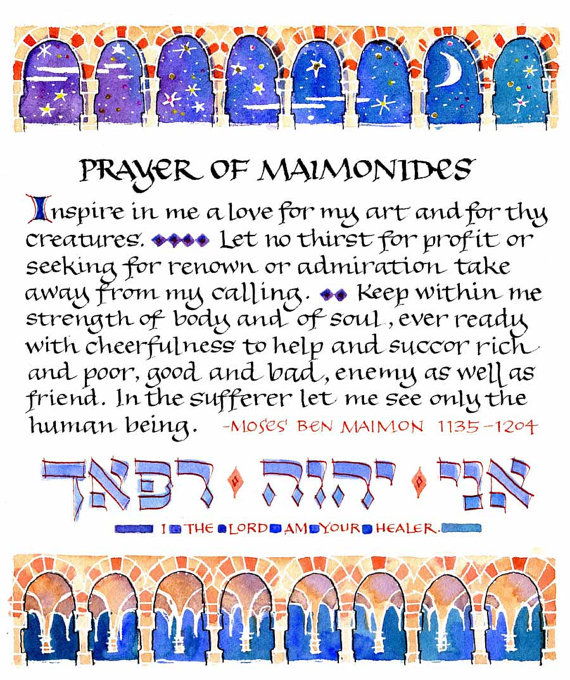
And finally, the Prayer of Maimonides, the twelfth century physician and philosopher:

prayer-of-maimonides

These holidays, wish me persistence and ‘stubborn gladness,’ as Liz Gilbert calls it.  I wish you all the same!