Love Letters

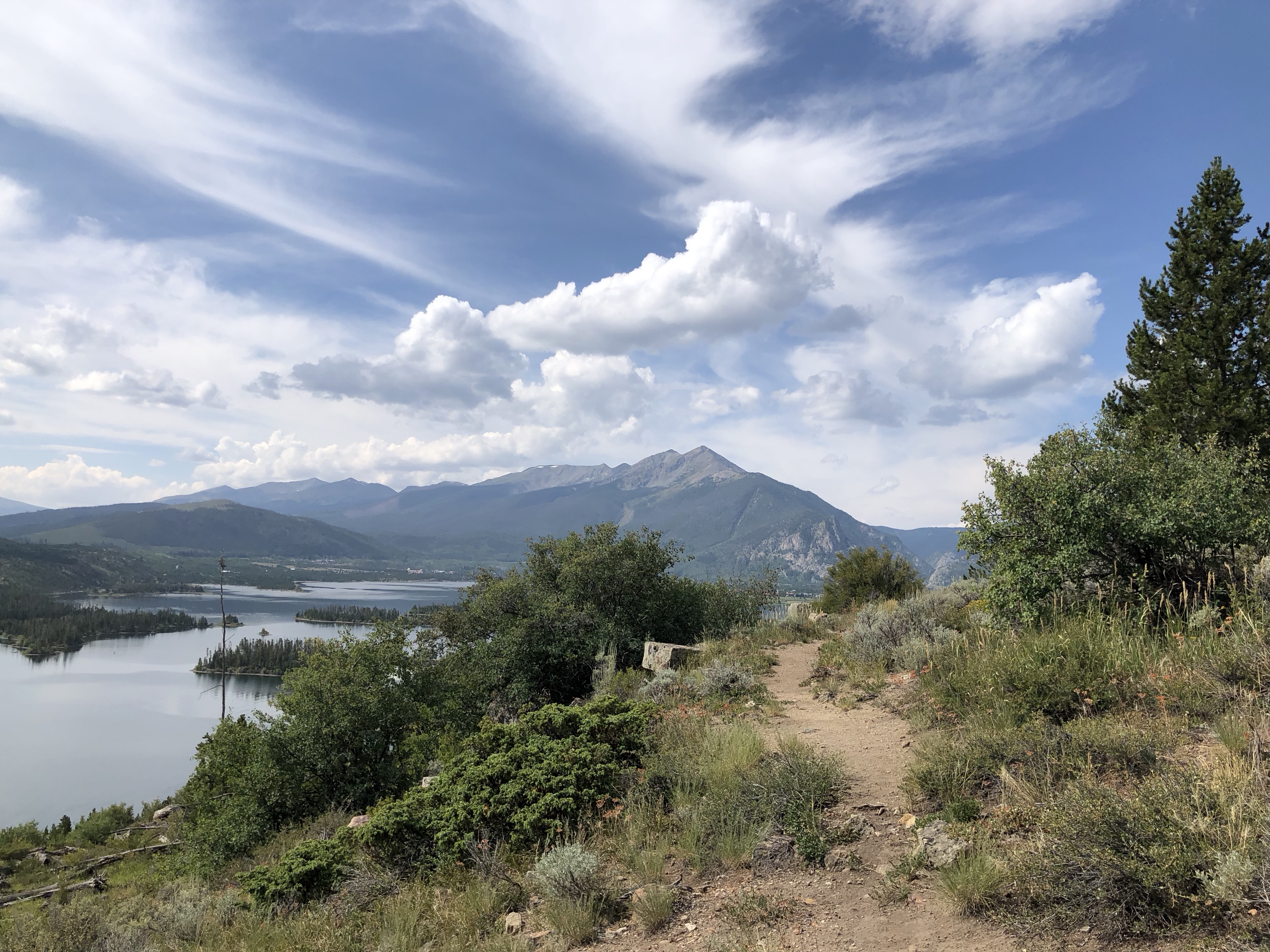
Sunrise, Sylvan Dale Guest Ranch, Loveland, Colorado. Photo courtesy of Dr. Anne Dixon

When did you last write a love letter? Send it?

What constitutes a love letter in your mind?

Depending on your definition, maybe you’ve written/composed and sent them your whole life and not even known it? Sometimes I think this is the case for me… definitely lately. Without question, I have written and sent countless ‘conventional’ love letters in my 50 years. Since at least 4th grade, I have professed and proclaimed love for and to many, in words, on paper. The pretty paper and pen fetish started early, and has been put to very good use. Responses have varied; looking back now I can take it all so much more lightly than I did in my youth. Putting your heart out in the open, wow, that can be intense. Exhilarating, giddy, tremulous, brave, honest, fearful, uncertain, upright, vulnerable. I wonder how many reciprocations, in any form, it takes to make up for all of the non-responses and rejections? I suppose it depends on all the things–to/from whom, magnitude of emotion, stakes of the relationship (on my end), expectation, context, timing… So much of any experience is determined by my own mindset at the time, the stories I tell about myself and the other person. I smile (smirk? cringe?) as I write this today, even chuckle, because oh my gosh, I took and gave it all so seriously back then! *sigh* The peace and steadiness that comes with age… There is a comfortable looseness, a confidence that comes from loving over decades. Relationships come and go, dive deeply and float in turn; the fluidity of it all emerges over time, teaches me to flow with it more and more easily. Awareness and acceptance of this natural, organic rhythm liberates me to express more freely and with less attachment… and paradoxically, the rewards of reciprocation feel that much more bright and lucious!


I still have a stack of New Year cards to send. This involves colored pens, stickers, stamps, and trips to the mailbox. I love it all. I figure it’s okay if they’re late, because it’s a personal greeting, something I take time to do specifically for someone. People appreciate that. It’s a form of love letter, I have decided, and when does anyone not want that?


Lately friends have sought me for reflection and advice. Our conversations are heartfelt and connecting. What an incredible honor for me, to be trusted so. I take that very seriously, to be sure. But the feeling in these exchanges is not heavy. Rather, it’s deep, close, bonding, meaningful. I find myself writing summaries and reflections afterward, hundreds of words’ worth. I feel a need to document and share back, to verify the thoughts, impressions, values, and goals; I want us both to record the integrity, affirm our own relationship and shared humanity with others in our lives. It’s not a high or rush I get from these encounters. It feels slower, an unfolding, shared in confidence, soft tones and close proximity, even if over the phone. These summary ‘love letters’, as I have come to think of them, are meant to reinforce what I see as my friends’ strengths of character, their core values, and the resulting alignment of their goals and actions. I keep these missives for myself, as well, because the connection nourishes me at least as much as it may help my friends.
They are love letters.


As seen on Instagram

I still love this meme so much. What a simple and moving reminder about what’s nost important in life–our relationships. The best part is that when I send the text, drop the card, and leave the voice message (all love letters), just the act itself feeds me already, whether or not a response ever comes. Giving love begets yet more love–the threshold potential for this positive feedback loop is so low, it’s a wonder we don’t walk around eurphoric all the time, just from feeling love for others, HA!


For every executive physical, I debrief with my patient at the end of the day. We review biometric data and test results. This discussion includes an Action Plan, in which the dietician, exercise physiologist, and I make health behavior recommendations in the context of the person’s current life circumstances. Travel, phase of family life (eg little kids vs young adults, empty nests, and aging parents), work role/stress/status–anything relevant to their health is assessed and factored for specificity to person, place, and time (hint: everything is relevant). Over the years, and the past year especially, I reflect on patients’ goals, fears, and values in all domains of life, in addition to body mass and fasting glucose. I talk about relationships, a lot. New patients seem surprised–most often pleasantly, sometimes not… I can attune and dial back if needed. Without fail, however, the more someone discloses, the more we share (because there is always two-way sharing), the more meaningful and dense my action plans get, the more I get to love on these patients, I have only recently realized. It’s okay if they don’t accept it–not everybody wants to feel loved by their doctor. For those who do, however, I am all in…and the rewards are exponential, at least for me.


I see you.
This is what you mean to me.
This is what I wish for you.

Every time we express these, when we convey them to someone we care about, then I say we have sent a love letter. I personally value the handwritten kind most–the swoop and pressure of writing implement, the acutely vulnerable yet high potential permanence of paper, someone’s thoughts and feelings in a particular time and place, documented so concretely, tactilely–to hold, see, and smell it all at once–the uplift almost defies description.


If you seek inspiration for your own love writing, I recommend two men whose work I admire:

Grant Gosch writes sensual missives and posts with accompanying black and white photographs that stir body and soul. Follow him @saltfox_writer on Instagram. You can receive his Saturday morning love letter via email; subscribe at http://www.grantgosch.com. I am 80% through his first novel, Kingfisher Lane, and may very well bold it on my 2024 list. Additionally, Grant offers commissioned love letters in exchange for monetary support of his writing–believe me, this is high value. I have no financial interests in Grant’s work. I simply admire that he puts his heart out in the world, to connect and write on behalf of any of ours. He is a gifted writer, possessed of highly attuned and effective emotional-verbal integration, offered to us from the wilds of the Pacific Northwest.

JP Greene also writes on love and life with eloquence, heat, and edge. Follow him on Insta: @typewrittenlovenotes. JP also offers a weekly newsletter, sent from Fort Collins, Colorado, written thoughtfully and with purpose. His second book, The Beauty of Sadness, drops on April 4. I have no interests in JP’s work, either, other than to amplify it because I think the world is better for his expression.

Funny that both of these writers choose to present their work on paper, typed old school on machines that deliver ink via ribbon. I imagine that is why their work, among other reasons, resonates so deeply with something in me. Kindred.


Love letters. When and what will you send next?

Also from Instagram, can’t recall source, sorry!

“What’s Your O-Ring?”

I grew up with this image on the wall.

Preventable disaster.

Space Shuttle Challenger has been on my mind lately. Last week Hector Carrillo did a live recording from Florida, experiencing cold temperatures there like the rest of the country. I attended six nightly online creativity workshops organized by Erin Mallon, narrator, writer, and podcast host. I now feel a familiar, swelling creative energy akin, in my metaphorical mind, to that housed in solid rocket boosters. Talking animatedly with Friend Donna the other day, I brought up Challenger and she asked me why, for such joyous and productive excitement, I choose a metaphor that’s one of the greatest tragedies of a generation?

Huh. Fascinating.

At first I thought it was just because Challenger was such a quintessential and iconic image of the space program in general, and growing up with rocket images all over the house [Ba worked for Lockheed Martin on the Shuttle Payload Integration Contract, he told me tonight when I requested a photo of the photo from home], I just pulled on those memories as convenient analogy. I had not ascribed any conscious meaning or relationship to the shuttle’s ultimate demise. I was ready to shrug off Donna’s question as peripheral to my creative journey. She prodded me gently, though, to engage some cosmic curiosity and explore further. Speaking of comic: Today, January 28, is the 38th anniversary of the Challenger explosion in 1986. 

For those too young to remember, the night before Challenger launched from Cape Canaveral that January day, temperatures dipped far below freezing. Engineers at Morton Thiokol, manufacturer of the O-rings that served essentially as gasket seals for the rocket boosters, advocated strenuously to delay the launch. They knew that temperatures that low would stiffen the rings, making them contract and fail, causing fuel leakage, uncontrolled combustion, and inevitable disaster. Bob Ebeling sounded the alarm first. Despite his and his colleagues’ presentations and advocacy, NASA elected to launch, and seven amazing people lost their lives.

Eventually Donna and I got to the bottom line Challenger question for my creativity and writing: ”What’s your O-ring?” OH, SO fascinating! I spent the next 24 hours and a good portion of my morning pages (21 consecutive days as of today) yesterday processing… I bet more insights emerge this week and beyond. Thus far it’s mostly more questions and a few vaguely related ideas, that apply to more than just my book project:

Where is there vulnerability where stability is assumed and taken for granted?
How can I detect it? Where are alarms sounding that I ignore because I don’t want to delay something that I want or expect? What realities am I denying to advance an agenda, but that put that very agenda at risk for abject failure because I deny them?

Booster energy as book energy: What happens when it leaks or emits inappropriately, and under which circumstances? What would that look like? Is it already happening?

Conditions and consequences: The parameters for normal function in the body are remarkably narrow. I have always marveled at how a person can not only survive, but function highly for prolonged periods, with multiple systems operating wildly outside of those parameters. Nature compensates automatically, elegantly. But there is always some cost, and compensatory mechanisms can only last so long before the system crashes. So for my writing, what are ideal and acceptable conditions for creative work to occur and thrive? How can I establish and maintain those conditions, monitor for derangement, and adjust accordingly? What costs are worth paying, for what reward and value, for how long? How can I know when I need to delay or even abort? 

The O-rings were only one part of a highly complex and integrated machine. Each part of any system has its own unique parameters of function, and is also inextricably linked to every other part. Derangement and compensation in one part inevitably affects the whole of parts in predictable and yet nuanced ways. How elastic is each part’s accommodation capacity, within and outside of its normal functional range? When function is impaired, what complex domino effect does that create, with what consequences for the whole system?

This post feels oddly satisfying in its total lack of conclusion. Truly, I can live the quesiton(s), as Rilke admonishes so eloquently. I look forward to what insights emerge in time, especially as I continue to release streams of consciousness in writing each morning. This week I will practice letting go of attachment to outcomes, and attend to habits that make my desired outcomes of high creativity and connection more likely: bedtime, morning light and writing, regular exercise, sitting with uncertainty.

Let’s see what happens!

Walking the Talk: Leading Indicators

The most perfect gift from Donna. xo

Eureka! and YIKES. 

What is the nature of performance anxiety? Is that what I’m having? Or is it increasing resistance as a magnet approaches that which attracts it at one pole and repels it at the other, until it finally anneals and the magic happens? Truly, friends, this book project is kicking. my. butt.

I talk to patients about habit change every day. I have read the books, studied the methods. I’ve written about it ad nauseum. And there is still so much more to learn and practice! I get frustrated, sitting down yet again and analyzing today, judging my slow and intermittently frequently stagnating progress. 

And then I smile.
Because there is progress! 

I joined Ethos three seasons ago, consistently completing eight strength or conditioning classes per month since then. I had no specific outcome goals at the outset. I just knew I needed to get out of my basement, learn new movements, widen my repertoire. I knew I needed a community for accountability and connection. I trusted the folks at Ethos to meet those fundamental needs, and that my general outcome goals of getting stronger and more fit would be realized with time. And voila, it’s all true. Who knows how much I’ll eventually be able to bench press or dead lift? I’m doing more today than I ever have in 50 years of life, so who cares? All I have to do is keep showing up, bringing what I’ got, and whatever outcome I get will be valuable and worthy of the effort. I sense it already–how my clothes fit, the changing curves and definition, and how I feel–body, mind, and spirit. I also get feedback from others, which is gratifying. It all fuels me to keep going.

As of today, I have completed 14 consecutive days of Sunlight Before Screens, Morning Pages, and delayed caffeine. Thanks again, Shane! Here as well, specific outcomes/lagging indicators are not the goal (what would they even be?); rather it is the practice I’m after. Because I know that a more mindful and intentional start to my day is better for my health and well-being than a mindless and random one. Maybe similar to having my Ethos community for fitness, just knowing that my book hero and fellow fans endeavor, together, to establish and maintain this health practice holds me up? Just like going to the gym, I honestly, shockingly, look forward to getting up early every morning now and cracking open the journal, even if I go to bed late, just to see what may flow from the pen in that unfocused, creative state of my personal daily dawn. I’m only two weeks in, but I perceive significant benefit already: High energy and sense of purpose and confidence; increased attunement to hunger (or lack thereof); decreased craving for coffee (I’ve forgotten all about it a couple times). That last one floors me–I’ve had coffee every day since high school. Years ago when I abstained on non-patient days I noticed a heavy melancholy set in around mid-morning–fascinating, and a little alarming… 
But this morning I made a 70/30 regular/decaf blend to start using every day, and I have a strong intuition that it will be just fine; it’s all part of a concerted yet organic evolution. 
Everything is connected.

For whatever reason (12 days of cumulative creative opening?), this weekend felt portentious for book work. I posted on Instagram. I texted multiple friends requesting energy sent my way for perseverance and discipline. Whatever they did worked, because the ideas and ink bubble and flow with force. The EUREKA moment came yesterday when I realized that I don’t really know what my book will actually be in the end. That was also the YIKES moment–how do you start a project when you don’t actually know what you’re making? I feel an irresistable call to write something, and I have consistently answered that call for over eight years. I know I can write. I know I want a synthesis, an integrated whole of accumulated learnings, ideas, and original conclusions, in the form of a book. But the structure, organization, and specific content that I will publish is actually still somewhat unknown to me, a coy, elusive, and inviting mystery. 
What a strange relief! Because now I can approach it like fitness and mornings.

If I don’t know the outcome, but I have clarity on the process, then I’m free to steward the work with openness, curiosity, humility, generosity, and joy! I can achieve my goal of having a pitch and proposal to present by April 18. I just don’t know, and don’t necessarily need to know, exactly what it will be. Very likely, it will not be what I imagine today. But if I sit BUTT IN CHAIR (BIC) and do today’s work each day, with disclipline and lightness, then I can let go expectations of any particular product. I can trust the process, that whatever turns out will be fine and good, because it will be the result of honest, authentic, deeply committed effort. It will be me, because I showed up every day to create it. How motivating!

I wrote my post on Meaningful Metrics about a year ago now. I think I have shared it with patients almost every week since then. Weight and cholesterol are lagging indicators. Habits are the leading indicators, the concrete, real time metrics that can be monitored, adjusted and maintained, and that have much higher predictive value. I can’t tell you how much you’ll weigh a year from now if you start doing the 7 minute workout. But if you do 7 minutes, three times a week, for 52 weeks, I can tell you that you’ll feel differently, likely better, in your body. And there will also likely be downstream benefits in other domains of your life and health. Focus on the practices; the outcomes will take care of themselves. Trust the process; get help when needed, assess and adjust regularly, and establish effective accountability. 

So if I sit down, get centered, and show up for my book each day, it will show up and emerge for me. I set a concrete product goal for April, tied to relevant things that make the deadline meaningful. But if I focus on April today, I get in my own way. Today is for today’s work. I have interim goals to benchmark, to keep me aware. I can continue leashing the gremlins–the ones telling me I ‘should’ have figured this all out long ago, the voices of perfectionism and un-compassion. Thank you, now go sit in the corner. I have work to do. 
I’ got this.

What are you working on this year? What leading indicators guide you, keep you on track? What else helps? Who’s on your team?
ONWARD, my friends. The world needs our contributions.