What assumptions and judgments do you make about romance novels and their readers?
I used to assume they were both shallow and low value for intellectual growth. Not sure I had much judgment, thankfully, and I no longer harbor these wildly wrong assumptions. I have attempted to explain on this blog and in conversations how and why I value this genre so deeply, so unexpectedly. I’m still processing, still allowing it to transform me in the best and most bonding ways, still seeking the words to express it all.
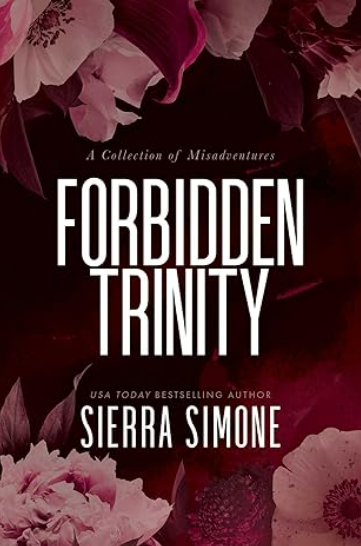
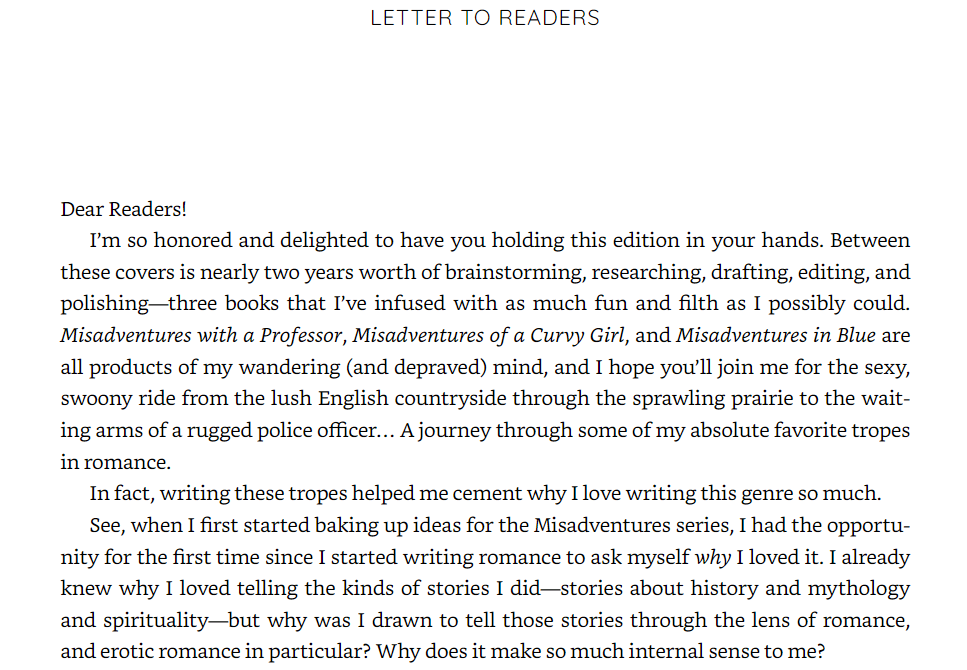
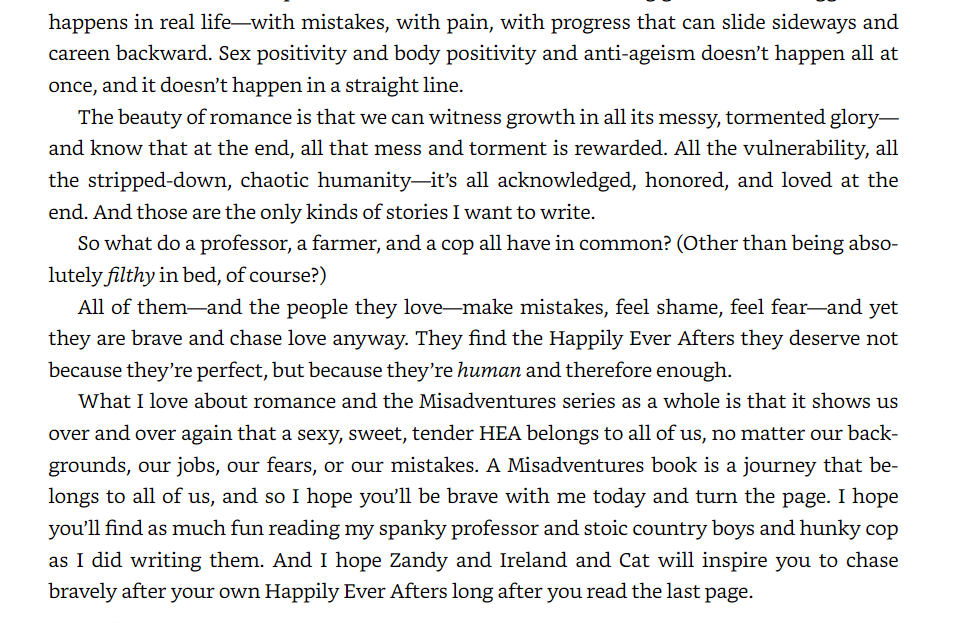
Sierra Simone has relieved me of that last burden. She has released her Misadventures collection in a new, single bound edition. It will be my fifth ever romance print purchase, all because of her Letter to Readers. In it, she explains the value of romance better than I ever could. I took screen snips of the Amazon text sample from the letter, to share here and document my endorsement. It just makes me beyond joyous that writers feel more and more brave, safe, and validated to express these deep, universally human stirrings. Their expressions resonate with, summon, and connect to that profound inner sense and knowing that our culture would sooner have us conceal and repress. No more, we can say. BOOBS OUT, All In, Own It.
Onward, my friends. This is very healthy movement.
Sunrise, Sylvan Dale Guest Ranch, Loveland, Colorado. Photo courtesy of Dr. Anne Dixon
When did you last write a love letter? Send it?
What constitutes a love letter in your mind?
Depending on your definition, maybe you’ve written/composed and sent them your whole life and not even known it? Sometimes I think this is the case for me… definitely lately. Without question, I have written and sent countless ‘conventional’ love letters in my 50 years. Since at least 4th grade, I have professed and proclaimed love for and to many, in words, on paper. The pretty paper and pen fetish started early, and has been put to very good use. Responses have varied; looking back now I can take it all so much more lightly than I did in my youth. Putting your heart out in the open, wow, that can be intense. Exhilarating, giddy, tremulous, brave, honest, fearful, uncertain, upright, vulnerable. I wonder how many reciprocations, in any form, it takes to make up for all of the non-responses and rejections? I suppose it depends on all the things–to/from whom, magnitude of emotion, stakes of the relationship (on my end), expectation, context, timing… So much of any experience is determined by my own mindset at the time, the stories I tell about myself and the other person. I smile (smirk? cringe?) as I write this today, even chuckle, because oh my gosh, I took and gave it all so seriously back then! *sigh* The peace and steadiness that comes with age… There is a comfortable looseness, a confidence that comes from loving over decades. Relationships come and go, dive deeply and float in turn; the fluidity of it all emerges over time, teaches me to flow with it more and more easily. Awareness and acceptance of this natural, organic rhythm liberates me to express more freely and with less attachment… and paradoxically, the rewards of reciprocation feel that much more bright and lucious!
I still have a stack of New Year cards to send. This involves colored pens, stickers, stamps, and trips to the mailbox. I love it all. I figure it’s okay if they’re late, because it’s a personal greeting, something I take time to do specifically for someone. People appreciate that. It’s a form of love letter, I have decided, and when does anyone not want that?
Lately friends have sought me for reflection and advice. Our conversations are heartfelt and connecting. What an incredible honor for me, to be trusted so. I take that very seriously, to be sure. But the feeling in these exchanges is not heavy. Rather, it’s deep, close, bonding, meaningful. I find myself writing summaries and reflections afterward, hundreds of words’ worth. I feel a need to document and share back, to verify the thoughts, impressions, values, and goals; I want us both to record the integrity, affirm our own relationship and shared humanity with others in our lives. It’s not a high or rush I get from these encounters. It feels slower, an unfolding, shared in confidence, soft tones and close proximity, even if over the phone. These summary ‘love letters’, as I have come to think of them, are meant to reinforce what I see as my friends’ strengths of character, their core values, and the resulting alignment of their goals and actions. I keep these missives for myself, as well, because the connection nourishes me at least as much as it may help my friends. They are love letters.
As seen on Instagram
I still love this meme so much. What a simple and moving reminder about what’s nost important in life–our relationships. The best part is that when I send the text, drop the card, and leave the voice message (all love letters), just the act itself feeds me already, whether or not a response ever comes. Giving love begets yet more love–the threshold potential for this positive feedback loop is so low, it’s a wonder we don’t walk around eurphoric all the time, just from feeling love for others, HA!
For every executive physical, I debrief with my patient at the end of the day. We review biometric data and test results. This discussion includes an Action Plan, in which the dietician, exercise physiologist, and I make health behavior recommendations in the context of the person’s current life circumstances. Travel, phase of family life (eg little kids vs young adults, empty nests, and aging parents), work role/stress/status–anything relevant to their health is assessed and factored for specificity to person, place, and time (hint: everything is relevant). Over the years, and the past year especially, I reflect on patients’ goals, fears, and values in all domains of life, in addition to body mass and fasting glucose. I talk about relationships, a lot. New patients seem surprised–most often pleasantly, sometimes not… I can attune and dial back if needed. Without fail, however, the more someone discloses, the more we share (because there is always two-way sharing), the more meaningful and dense my action plans get, the more I get to love on these patients, I have only recently realized. It’s okay if they don’t accept it–not everybody wants to feel loved by their doctor. For those who do, however, I am all in…and the rewards are exponential, at least for me.
I see you. This is what you mean to me. This is what I wish for you.
Every time we express these, when we convey them to someone we care about, then I say we have sent a love letter. I personally value the handwritten kind most–the swoop and pressure of writing implement, the acutely vulnerable yet high potential permanence of paper, someone’s thoughts and feelings in a particular time and place, documented so concretely, tactilely–to hold, see, and smell it all at once–the uplift almost defies description.
If you seek inspiration for your own love writing, I recommend two men whose work I admire:
Grant Gosch writes sensual missives and posts with accompanying black and white photographs that stir body and soul. Follow him @saltfox_writer on Instagram. You can receive his Saturday morning love letter via email; subscribe at http://www.grantgosch.com. I am 80% through his first novel, Kingfisher Lane, and may very well bold it on my 2024 list. Additionally, Grant offers commissioned love letters in exchange for monetary support of his writing–believe me, this is high value. I have no financial interests in Grant’s work. I simply admire that he puts his heart out in the world, to connect and write on behalf of any of ours. He is a gifted writer, possessed of highly attuned and effective emotional-verbal integration, offered to us from the wilds of the Pacific Northwest.
JP Greene also writes on love and life with eloquence, heat, and edge. Follow him on Insta: @typewrittenlovenotes. JP also offers a weekly newsletter, sent from Fort Collins, Colorado, written thoughtfully and with purpose. His second book, The Beauty of Sadness, drops on April 4. I have no interests in JP’s work, either, other than to amplify it because I think the world is better for his expression.
Funny that both of these writers choose to present their work on paper, typed old school on machines that deliver ink via ribbon. I imagine that is why their work, among other reasons, resonates so deeply with something in me. Kindred.
“Tell me about your emotional support network,” I ask patients every year at their annual exam.
Our relationships kill us or save us, I am still convinced.
How is your emotional support network? If you’re really honest: How secure are you in your relationships? How truly connected do you feel to the people in your life? In my mind, secure and connected relationships make up the core of our health and well-being. They are what give us deepest meaning and purpose, and what hold us up through any and all adversity.
This feeling of closeness, the ineffable sense of connection that inspires the most timeless and evocative poetry, that moves us to heroic acts, and that inexorably bonds lovers, friends, and especially mothers and children, is mediated in large part by oxytocin, the so-called love hormone. In the body it facilitates childbirth and lactation by contracting smooth muscle in the uterus and milk ducts. It plays a role in sexual arousal and orgasm. In the brain it promotes feelings of relaxation, trust, and belonging. It may even make us better at attuning to one another’s emotional cues. Levels rise when we connect with others, such as when hugging, dancing, and even reading or hearing stories. Interestingly, oxytocin also increases in times of stress, such as when we are separated from loved ones and feeling anxious. How fascinating and protective–I LOVE how nature works! The research seems new, but it may be that when cortisol rose under threat stress (of which social isolation is one of the most severe and dangerous), our ancestors whose oxytocin levels also rose survived better because it caused them to seek reconnection with the tribe, to stay close despite the drive to separate. Like so many things in nature and the body, the dynamic balance of opposing instincts gives us amazingly effective elasticity, flexibility, and adaptiveness–not only for survival but to really thrive.
Like other neurotransmitters, oxytocin’s presence in tissues is transient, stimulated and cleared in the course of normal cellular function. That said, the frequency, intensity, and consistency of tissue exposure to oxytocin has important consequences. More oxytocin correlates with improved mood, more secure attachment, and even increased pro-social behavior such as donating to charity and helping others in need. So how can we get more of this life-enhancing hormone in our systems? It’s about relationships, duh.
“She understood now. Treasure wasn’t something that could be picked up and carried off, that could be owned. Whatever happened here… could only happen here, and after it happened, it lived on inside you.” —The Conquering of Tate the Pious, Sierra Simone
Multitple times a week, I think my brain must be positively swimming in oxytocin. Ethos workouts with Jacob, Pam, Tim, Kasey, and now Andrew and Hailey stimulate it, for sure. I schedule regular meals and calls with close friends, and that always lifts me. These interpersonal contact highs defy verbal expression, truly. When I meet someone new I listen for their stories, engage my most sincere curiosity, and ask open ended questions to learn more about the very interesting person in front of me. We inevitably find something fascinating to share and expound on. I make these connections all the time, and the benefits last.
So therein lies the treasure. There simply is no substitute for the time and attention required to connect meaningfully in relationship with our fellow humans. Pictures in albums and shared on social media are great to commemorate, but they only matter because they bring back the feelings we had in communion–that warm and fuzzy, settled yet giddy, glad and joyous sense of true togetherness and connection.
And it doesn’t necessarily need to be in person. Phone, video, letters–OMG letters! Read how The World Showed Up For Steven through www.moreloveletters.com, a website that allows people to request snail mail for their loved ones going through a hard time. Steven was widowed after 64 years of marriage and his daughter thought she could get maybe a dozen people to drop him a note. He received hundreds of letters, some that also included gifts of books, drawings, and invitations to Zoom meals. You are not alone. If that doesn’t raise someone’s oxytocin levels, I don’t know what does.
Cards, gestures, messages, collages, stories; hugging, laughing, crying, cuddling, making love–sharing love–that’s what it’s about, my friends. And it’s all kinds of love: romantic, platonic, fraternal, familial, collegial–Agape. Just the act of giving it heals us, even if we don’t necessarily get it back. *sigh*
I bet writing this post has elevated my oxytocin levels! As I think of my amazing friends, my loved ones, my patients, colleagues, and all of you readers–we are all connected! I feel it in my chest the most–full and calm–comforted the way a soft, heavy blanket feels on a cold night. If you want an oxytocin boost and blogging isn’t your thing, try these 12 suggestions. Or just do what the meme below says. Regardless, I hope you’re getting all the connection you need and want to live your best life, dear Reader. It’s what I wish for us all.