Three Years Ago Today

Where were you on February 25, 2020? What was happening around you? What were you doing, planning, looking forward to, worried about?

What day did COVID change your life?

On New Year’s Eve, 2019, my niece declared that everybody was overreacting to the infection sweeping across Wuhan, China. It won’t be a big deal, she said. I specialize neither in infectious disease nor public health, but I knew then that what was coming would be a big. fucking. deal.

This morning, stepping out into the bright sun and crisp air at the end of another unusually mild Chicago winter, Daughter and I recalled 3 years ago. We had just spent a long weekend in Seattle, just for fun. Son had said then that he could see himself living there ‘after school,’ and lo, he ended up there for school. Little did we know then that COVID had already landed, right there, where we were.

Within weeks, whole organizations and governments mobilized and immobilized; life mutated irrevocably around us everywhere. COVID hit me in the face by cracking one of my friendships early on. The week of March 9, I begged off of a gathering, and my friend was angry. I respected and admired her, and loved her family–still do. She subsequently railed at the prospect of lockdown and social distancing, citing economic fallout, apparently dismissing my alarm at the risk to our healthcare system, and my own colleagues, if we deferred such drastic measures. It took me by surprise, floored me, and I was hurt. I wanted to talk more about it, talk through it. But these three years, every time we approach our differences here, she respectfully declines to continue. I respectfully agree. We hit a boundary in our friendship then, which I accept. I can engage with difference elsewhere; there is no shortage of opportunities. Over this time I believe I have both sharpened and softened my communication skills around disagreement and dissent, and I’m still grateful for every chance to practice, learn, and improve.

Facebook showed me what I posted three years ago today. I don’t know which leader moved me to profess my appreciation on social media, but I bet it was one of two, so I emailed them both today with the screen snip of the post. “…recalling 3 years ago, watching and waiting for the pandemic wave to hit us, standing in a state of novel awe and uncertainty.Β  I also remember feeling confident, though; I understood the medical and public implications and trusted my immediate professional and personal circles to think and act rationally and thoughtfully… Our organization has its challenges, both intrinsic and extrinsic.Β  Each day, though, I’m still convinced and proud that everybody’s doing their best for the greater good. So Happy Saturday, and thank you for you leadership.Β πŸ™‚” Having led a small practice through the first 14 months of the COVID morass, I suspect any sincere expression of acknowledgement and appreciation, at anytime, even now, boosts any leader’s spirits. We are all still going through it, and we still need to hold one another up.

This is the 42nd post that appears on a “COVID” search of this blog. I process by writing. Reading back, I apparently felt more fear and anxiety at the outset than I may remember. Memory is complex! Today I recall vividly the acutely discordant and uncomfortable conversations with my friend, while minimizing the overall stress of the time and circumstances? How fascinating. We would all do well to ‘remember’ this paradox of recollection as we continue to navigate, negotiate, and collaborate hereafter.

“We write to taste life twice, in the moment and in retrospect.” Anna Quindlen includes this quote by Anais Nin in her book, Write For Your Life. Have you anything to review from three years ago–emails, letters, photos with captions, blog posts? What does any of it show you about your feelings, thoughts, actions, and relationships back then? How has your life evolved and transformed in the short and profound time since? How have your relationships moved? I’m gratified to take some time today to recall and reflect, and to have concrete evidence of myself to do it with.

Write on, my friends.

Why I Take the Scenic Route

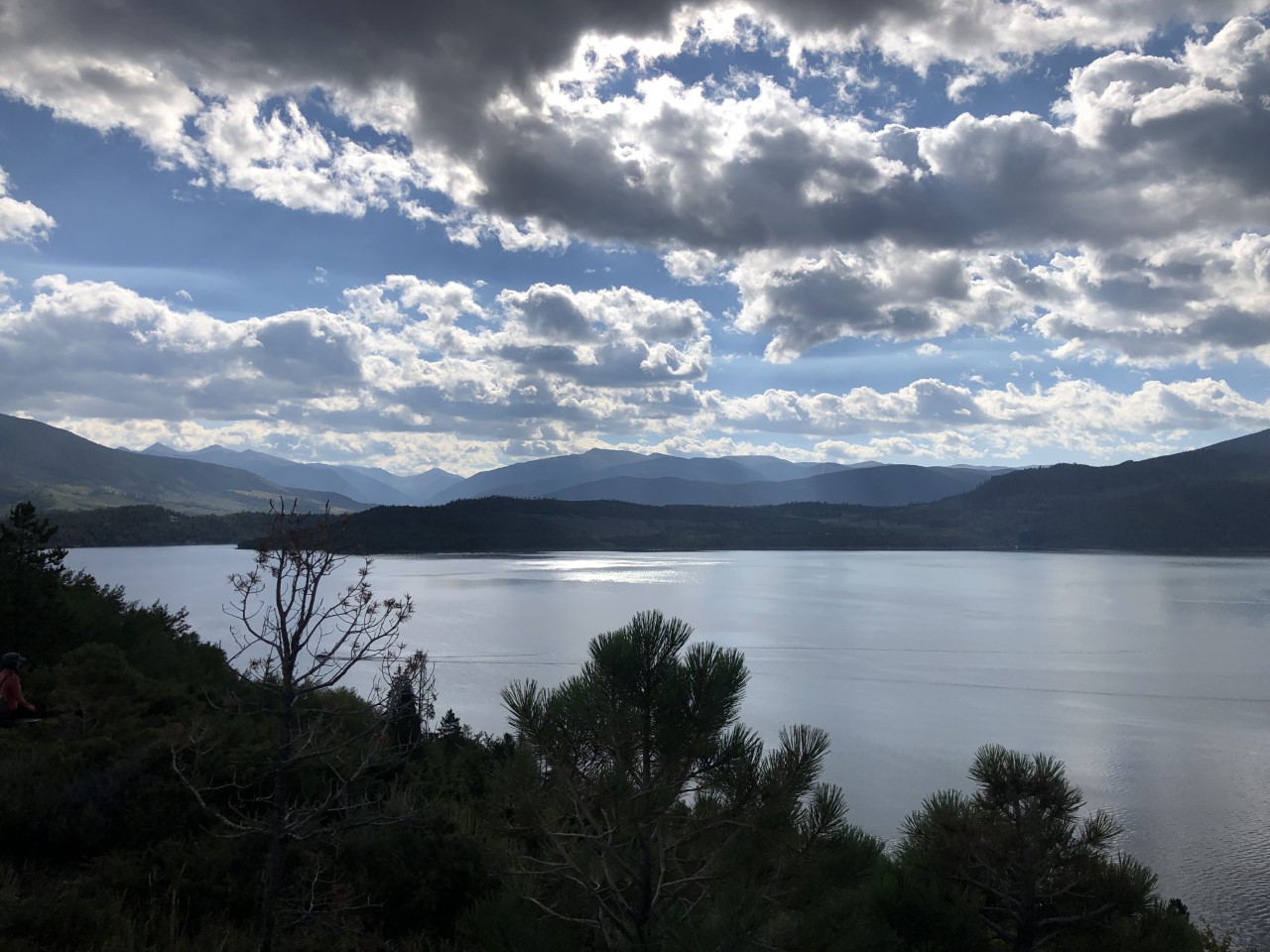
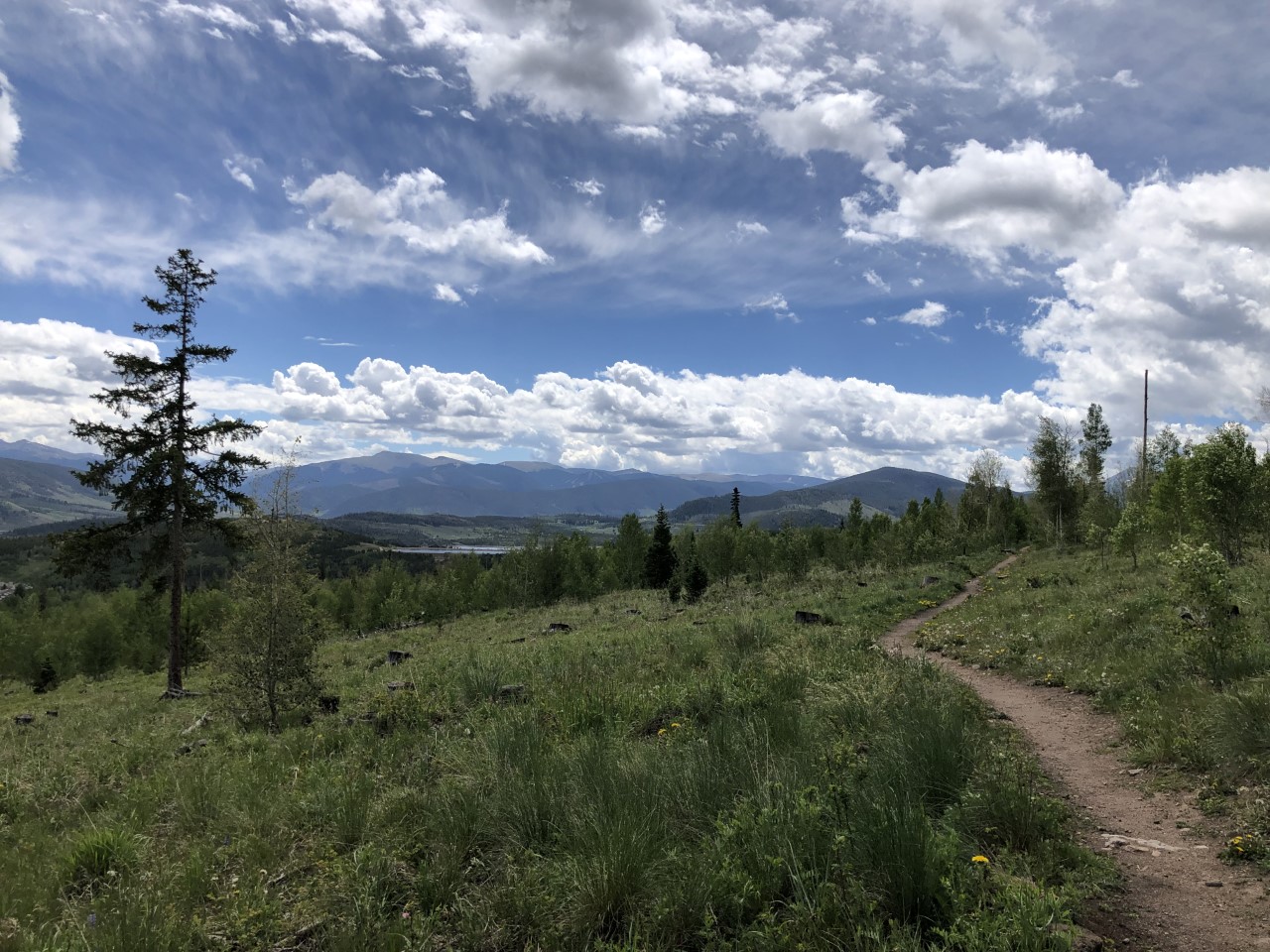
June 23, 2020 somewhere in Colorado

I-70 or 285?

I ask myself every time I leave Centennial, on my way to Silverthorne. If I have time and nobody in the car who will complain, I always choose 285. It takes at least 45 minutes longer, and it’s a much prettier drive. Thanks to dear friend Rachel who took me this way the first time in 2012, I have now stopped at state parks I never knew existed and passed through beautiful valleys and plains that take my breath away. Less traffic also makes for a more relaxing, even contemplative ride, which I appreciate more and more. Fun turns that open up around the bend to expansive landscapes never get old, and depending on time of year or day, and of course weather, I never know what I’m going to get. Every time, I am richly rewarded with yet a new perspective on the path, the journey–this iteration of the way. I get to explore and learn, to savor and revel. I learn what exits lead to which trails, where to get gas, and where to stop for the best views.

I have the sweetest gig any primary care doctor could hope for. With 5% of a typical full time patient panel, I have the greatest luxury in all of medicine: time.

When someone presents with classic signs and symptoms of a well-described and well-understood condition, it’s okay to take the highway of standard testing and conventional treatment. When the story and picture are less clear and straight, we need to slow down, look around, listen harder, wander the side roads. What’s rustling in the bushes? What path was taken to get here, and what roadblock(s) encountered along the way? What equipment do we anticipate needing as we proceed, and will we know how to use it?

Sometimes even the clear and straight path turns icy, muddy, or otherwise unexpectedly obstructed. This is when knowledge of alternate routes really pays off; even better if those routes are familiar. So often I take extra time talking to patients, even when I think I know what’s happening. I ask more questions to flesh out the story fully, to learn more. Have you had this before? What’s same/different about it this time? What was the context? What made you call me about it? How much is this bothering you? What are you worried about? What’s going on in your life now that may have triggered this? What else is happening? What do you think is going on, what story are you telling? Anything else?

I never know what I’ll learn in these meandering exchanges; most of the time I just get to know my patient a little better. That’s worth so much in itself. And eventually, I have learned, all of this accumulated familiarity matters. My ‘impression and plan’ for any given problem can evolve quickly over a history and physical exam, sometimes taking sharp turns. And it’s the best feeling when my patient and I can look at each other and say, “Wait, remember when…?” and it sheds light from the past on what’s happening today.

Today’s objective may be relief of pain and discomfort. Depending on the severity and urgency of the problem, we may race to that end speeding on the freeway. Our journey together as physician and patient, however, is more like a long and winding road trip. We have much to explore, if we travel together long enough. When you’re not in pain and have some time, we can take the scenic route together, get to know each other better. All of the photos, wildflowers, stories, and memories we collect along the way just make the trip, and our connection, that much more beautiful.

Meaningful Metrics

  • On a scale of 0-10, 10 being physically, mentally, emotionally, spiritually, and relationally ideal, how to you rate your overall sense of health and well-being right now? 
  • How satisfied are you with how you feel in this regard?
  • If you’re not satisfied enough, what would make it better?
  • How can my team and I help?

I asked these questions recently on my patient’s executive physical summary. It was a more direct, concrete, and global query than I usually make, and better, I think.

When I think about the ultimate collective goal of medicine, maybe it’s preventing death–at least the premature, preventable kind? Just think of the time, energy and resources we Americans spend on anti-aging this, longevity that, etc. About a quarter of Medicare spending occurs in patients’ last year of life. We spend more money on healthcare, for much worse outcomes across multiple health metrics (including life expectancy), compared to other developed countries.

But isn’t death/longevity the ultimate lagging indicator? If my current patients live to be 80 or older, I will not know most of them at the ends of their lives–I’ll be long retired. How will I know if I helped them live longer or better? What metrics can I use in the meantime to know if I’m making a difference (of note, medical care of any kind appears to contribute only about 10-20% to overall health outcomes in the United States–the rest being determined by genetics, behaviors, and socioeconomic and environmental factors)?

We measure all kinds of things in the clinic: Weight/BMI, blood pressure, cholesterol, and blood sugar, among others. But other than weight, none of these metrics are sense-able in real time, unless they are extreme. They are markers of risk–correlates–and important to monitor. Taken together, they can indicate an individual’s risk for illness or even mortality. But they can never predict any given person’s ultimate health outcomes. They are incomplete markers. Other correlates such as loneliness and stress are just as important, and much harder to measure, so we generally leave them out of the overt risk assessment.

Too often, the metrics become the goals themselves. Look no further than the myriad wearable devices available today to track sleep. With little to no evidence as to accuracy, precision, or relevance of the ‘data’ collected, consumers fixate, spending precious psychological capital, on colorful graphs and numbers of their nightly sleep metrics. They compare results at the gym, evaluating and judging, thinking and worrying, even catastrophizing, about dementia or other decline because their sleep scores are less than ideal. Is this really better than simply attuning to one’s own body and mind? I think we can all estimate with adequate accuracy the overall quality and quantity of our sleep, and what affects it.

So what better metrics can we use to assess health and well-being in real time? Ideally, these would be sense-able markers, unique to each person, and also actionable in real time. I think we do this in many ways already–we attune, sense, and respond to body cues, and many patterns become routine, often mindlessly: We feel fatigued so we caffeinate. We feel anxious so we imbibe. We feel stressed so we eat, withdraw, or lash out.

Real time and sense-able markers of health and well-being include hunger, satiety, mobility, ease of motion, strength, pain, endurance, energy, joy, tension, curiosity, mood, confidence, ability to accomplish goals, and feelings of connection. But how often do we actually stop and sense these aspects of body, mind, and community? How might my advice about blood pressure, cholesterol, and glucose management change, if I asked you more relevant questions about how you feel in your body, mind, and spirit, at various times of day, and in various environments and contexts? How might this modify your openness to, engagement with, and ability to execute said advice?

My job as primary care physician is to help you be as informed and intentional as possible about relationships between your senses, health metrics, their risk correlates, and potential outcomes. It’s up to you to decide, in any given moment, what’s worth attending to, trading off and not, for which values and goals you prioritize. What are your ultimate health goals? What, if you have a moment to reflect at the end of your life, will give you peace? How can you attune and act today and hereafter, to make that scenario more likely?

I wrote to another patient recently, who expressed disgust at himself for regaining weight he had lost during the height of the pandemic, feeling alarmed at watching his ‘numbers go in the wrong direction’:

“My highest goals for you this year are to redirect your focus away from numbers (cholesterol, weight) and more toward tuning in to your body and mind.  I would love for you to come back next year and tell us about your unique signs of hunger, satiety, loneliness, sleep deprivation, and relationship rupture, and how you discovered to address them!  I think I want this for myself, too!”

When reporters ask healthy old folks how they stay well, they never talk about blood pressure, cholesterol, or blood sugar. They talk about finding fun ways to move their bodies, enjoying and moderating food, learning new hobbies, and staying connected to their loved ones. Medical metrics have their place; I think it’s in the back of the health awareness and action bus.

And no matter the length of your life, I want to help you make it the highest quality, every day you get to live it.